ARTICLE SECTIONS:
- Introduction
- Treatment of SIBO: antibiotics, diet, water fasting
- Janet’s fast
- Kathryn’s fast
- Round 1
- Round 2
- Zach’s fast
- Discussion
- Conclusions
This case report follows the progress of three clients who undertook extended fasts in order to heal SIBO (Small Intestine Bacterial Overgrowth).
A more academic version of this article appears as a peer-reviewed case report in the Journal of Preventive Medicine and Holistic Health. Direct link to the article here
Introduction
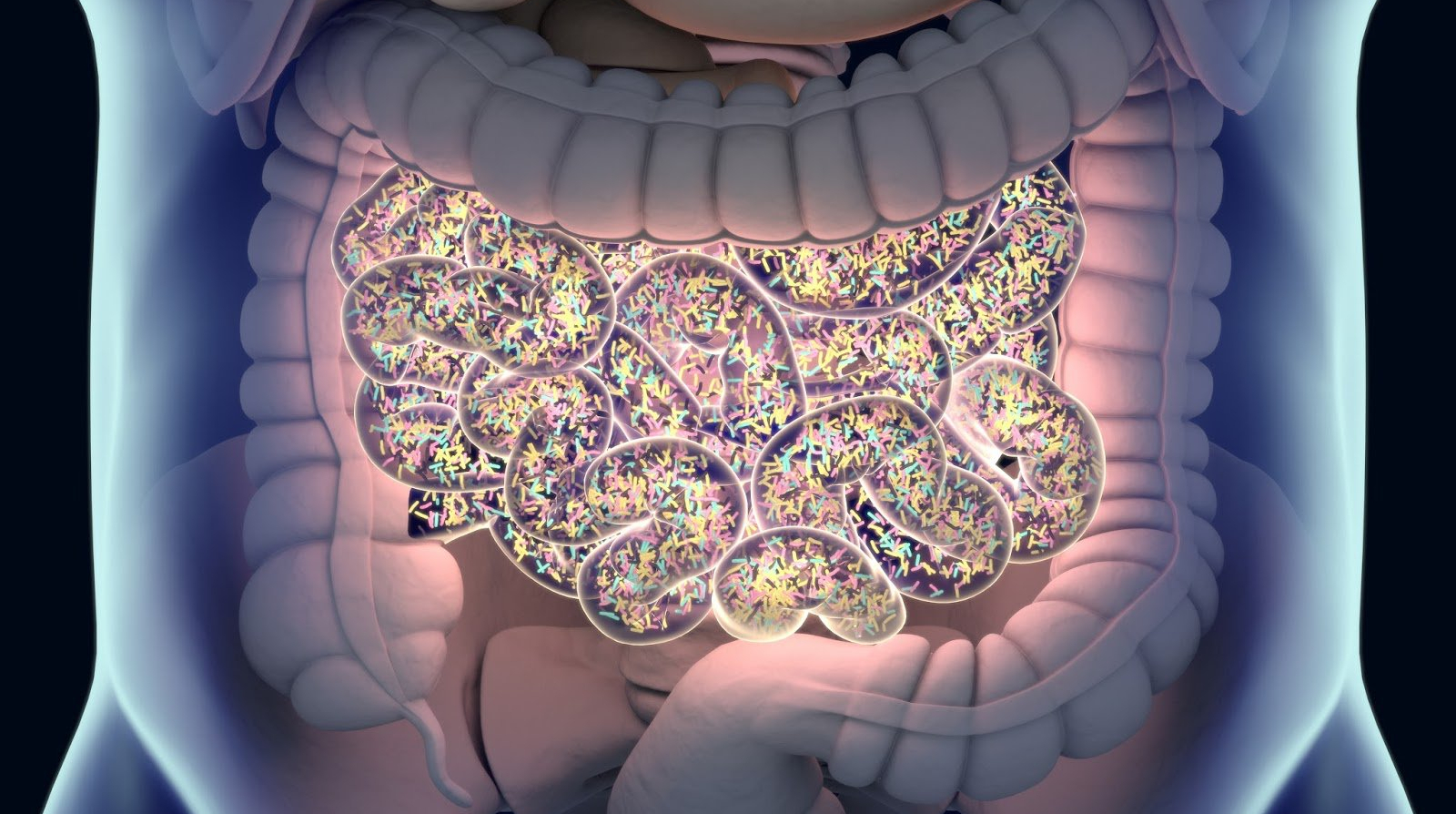
SIBO is a chronic and painful digestive condition which arises when the normal population of bacteria colonising the small intestine grows out of control, or when bacteria which normally reside in the large intestine spread through the ileocecal valve and into the small intestine. In addition to the significantly increased quantity of bacteria, SIBO also negatively impacts on the quality of the gut microbiome, including a correlation with elevated levels of pathogenic bacteria such as helicobacter pyloris.1 As such, SIBO constitutes one of the most widespread and debilitating forms of gut dysbiosis, a term defined by the Journal of Endocrinology as: ‘the imbalance of gut microbiota associated with an unhealthy outcome… involving the loss of beneficial microbial input or signal and an expansion of pathogenic microbes.’2
SIBO leads to a wide range of possible symptoms including food sensitivities, abdominal pain, gas, bloating, diarrhea and/or constipation, which over time can lead to malabsorption of nutrients, weight loss and eventually symptoms of chronic fatigue.
Unfortunately, few specifics are currently known about the actual pathogenesis and mechanisms of SIBO, even though it is estimated that up to 15% of the entire population suffers from it3 – that is, approximately 50 million people in the US alone. There is also confusion regarding the distinction between SIBO and, more generally, IBS (Irritable Bowel Syndrome). For instance, some studies estimate that up to 80% of people diagnosed with IBS suffer from the symptoms of SIBO.4
An important reason for the lack of current understanding regarding SIBO is the difficulty in directly accessing ‘the scene of the crime’ in vivo. Endoscopies into the small intestine are invasive, expensive and carry a degree of risk. Therefore, diagnosis tends to be made indirectly: through a breath test which measures the waste gasses produced by bacteria in the small intestine. All that most people know about their SIBO is whether they are ‘hydrogen positive’ (which tends to correlate with diarrhea), ‘methane-positive’ (which tends to correlate with constipation) or mixed ‘hydrogen-methane positive’.
Treatment of SIBO: antibiotics, diet, water fasting
Antibiotics:
As with other forms of gut dysbiosis, traditional modalities for treating SIBO are usually unsatisfactory, with short-term improvements frequently evolving into a long-term deterioration of symptoms. Although antibiotics may indeed help control an acute flair-up of pathogenic bacteria, the problem is that these drugs are also indiscriminate in destroying all microbes, both ‘good’ and ‘bad’. This means that following completion of a prescription of antibiotics, the gut environment is relatively empty and defenceless. Just like clearing a patch of ground with RoundUp (which likewise indiscriminately kills all plant life), it is very often the most aggressive gut ‘weeds’ which subsequently exert control over the ground.
Diet:
Because SIBO inherently involves a negative reaction to certain foods, most people experiment with diets designed to minimise digestive distress. While diet should certainly constitute a key element of any treatment program, the most celebrated anti-SIBO diets can easily trade a similar short-term benefit for a long-term loss. For example, although the principles of a FODMAP diet can play a crucial role in eliminating sensitising foods, the problem occurs because in actual practice most people exclude too many foods for too long a period of time. In doing so, they end up following an overly restrictive diet which can easily lead to a nutritional deficit – and all the more so because most of the least reactive FODMAP foods are acid-forming. Any acid-forming diet places a long-term burden on the liver, which (among other problems) leads to a gradual deterioration of bile quality, which then further impacts negatively on the health of the gut microbiome: thus perpetuating a vicious cycle of factors in which SIBO continues to thrive.
Water fasting:
It makes sense: in order to allow the gut to heal you need to leave it alone and stop the constant aggravation caused through eating. Water fasting does just this. However, giving the gut a break is just the beginning. In addition, the healing metabolism of an extended water fast also upregulates the immune system in the process. This provides a hugely important boost to the body’s usual regenerative powers, so that the damage caused by SIBO can be reversed. Furthermore, an extended fast also lowers the overall toxic load of the body. This means that after the fast, the burden on the liver in everyday detox is greatly reduced. Although there is little research on the subject, my own observations among hundreds of clients suggest that a ‘happy’ liver post-fast is much more capable of producing healthy bile, which then goes on to nourish a healthier gut microbiome: thus reducing any further tendency towards SIBO and gut dysbiosis in general.
Quite simply, an extended water fast is the most powerful modality available to heal from SIBO.
However, a word of warning: in cases of SIBO it is hugely important to take care during both the refeeding process immediately after the fast as well as in the medium term. Especially when a client has suffered from gut dysbiosis for years, if not decades, it can often take several extended fasts to reach full gut health. For instance, although one extended fast is likely to significantly reduce SIBO, it is possible for a few old food sensitivities to remain, only to be healed through a second, subsequent fast. I have also frequently observed that one extended fast may fully heal SIBO, but in its place another, less debilitating condition can arise (such as histamine sensitivity), which can then be resolved a few months later through a second fast.
The bottom line is that water fasting heals SIBO, along with gut dysbiosis in general. However, navigating both the fast itself as well as an appropriate refeeding diet can be like walking a tightrope, in order to ensure that the initial healing deepens to become a lasting success.

ONLINE COURSE
Complete a 3-day water fast
This video + pdf bundle provides you with all you need to know in order to safely, successfully and smoothly carry out your first 3-day water fast. If you already have a little experience, there are plenty of additional tips to help you go deeper into water fasting.
Janet’s fast
Janet (not her real name) is 22 years old and suffered from SIBO since middle school, which had been a very stressful period for her. Her symptoms worsened two years ago, after contracting Covid. Given the length of time since developing SIBO a whole decade ago, and given that Covid had also negatively impacted on her hormonal system, we initially decided upon a 28-day fast. However, despite Janet’s enthusiasm and motivation to heal herself, we ended up reducing the duration of her fast to 21 days because of a higher-than-expected workload during the fast. Under such circumstances, I warned her that an even longer fast was likely to cause only additional stress.
The fast itself progressed remarkably smoothly, with no significant symptoms at all. Given that she had only limited fasting experience beforehand, this threw up the question of how strongly her body was detoxing in the first place – and, consequently, whether she was actually benefiting from much healing. Unfortunately, when clients have suffered from a chronic health condition over an extended period of years, their immune system frequently gets worn down to the extent that it eventually loses the strength to powerfully detox and heal, creating detox symptoms in the process. In instances like these, I frequently work with clients to develop a longer-term protocol which enables them to gradually develop their fasting ‘muscle’, so that future water fasts can produce more powerful results. In Janet’s case, a further factor contributing to the suspicion of limited detox and healing was her full-time workload through the fast. Quite simply, too much energy spent on working means less energy for healing.
After the fast, we followed a careful dietary protocol which combined the specific demands of refeeding with individualised anti-SIBO foods. Despite indications during the fast that Janet’s immune system might not be able to rally enough strength, it soon became clear that she had in fact fully healed from SIBO. I attribute this mainly to the natural vigour of a young person’s immune system, and it is always a wonderful surprise when a client is able to reap the benefits of this!
Four months after her 21-day fast, Janet approached me again, because a few weeks earlier she had contracted Covid for a second time. Although she had made a swift recovery from the acute respiratory illness, it unfortunately re-triggered her gut dysbiosis. She didn’t take a SIBO breath test to confirm her symptoms because it was clear that, whatever the cause, the solution was the same: to do another water fast.
This time Janet undertook a 14-day fast. Although it too proceeded relatively smoothly, she did experience stronger detox symptoms than during the first fast, including chills and the release of toxic bile. Towards the end of this second fast, she also experienced clear emotional detox. An important part of my job as a water fasting coach is to facilitate deeper healing, beyond merely the physical. In my experience, the deepest physical healing also tends to require an emotional detox of stress, psychological blocks and even trauma from the past. The fact that Janet felt safe enough to open up to this during her fast was an extremely important element contributing to her longer-term health. I am also convinced that the fact that she was able to rest more during this second fast helped her to surrender to the deeper emotional processes catalysed by the fast.
After the fast, we similarly followed a careful dietary protocol which combined the specific demands of refeeding with individualised anti-SIBO foods. Although this time Janet’s digestive system took a little longer to come back to life, it was clear that her gut issues had fully resolved through her 14-day fast. To the best of my knowledge, Janet continues to thrive today.
Check out the webshop on waterfasting.org
The webshop offers downloadable fasting plans and guides to help make your water fast a success.

Kathryn’s fast
Round 1:
Kathryn (not her real name) is 46 years old. She suffered from general gut dysbiosis, leaky gut and mixed hydrogen and methane SIBO since her teenage years. The childhood trauma which almost certainly lay behind her health issues also led to a decades long history of drug abuse and eating disorders, including bingeing and bulimia. Although she managed to turn her life around several years ago, Kathyrn continued to suffer from most of the same symptoms, including bloating, constipation, migraines and chronic fatigue. To take the edge off her digestive stress, she relied heavily on HCl and digestive enzyme supplements. In her own words, “I’m taking so many supplements I rattle!”
She tried a few short water fasts in the past (up to 5 days) but felt “horrible throughout”. Prior to contacting me, she had had another flair-up of her gut symptoms and was following a strict low-carb diet along with a prescription of the antibiotic Rifamixin. Although some of the symptoms had temporarily improved, she didn’t enjoy the diet, and she knew she had to do something more radical in order to bring any lasting positive change to her life. We decided on a 28-day fast, and negotiated a time during which the community where she lived would be able to support her, so that she could fully rest throughout her fast.
The fast itself kicked in hard and fast, with strong detox symptoms developing already from the third day. These included severe exhaustion, migraine, nausea, muscle and back pain. By the second week she was also regularly suffering from insomnia. After a brief period of respite, the last week of her fast witnessed a return of much more stubborn chronic nausea and acid reflux, along with occasional heart arrhythmia. In short, this was not an easy fast. In cases like this, my main role as a water fasting coach is to try and offer solutions which provide a greater degree of comfort to the client while still maximising the detox/healing potential of the fast. In cases of late-stage nausea, it is also crucial to be able to distinguish between a situation which is best endured and pushed through, and one which requires the fast to be broken on safety grounds.
Even after breaking the fast, her detox continued so powerfully that she suffered from nausea for another 3 days. Because of the intensity of her symptoms at the end of her fast, not only did we have to walk a tightrope in terms of avoiding potentially SIBO-activating foods within the already narrow range of possible foods appropriate for the end of any 28-day fast, but we also had to take care to avoid anything which might aggravate the continuing nausea and acid reflux.
A week into the refeeding period, it was becoming increasingly clear that Kathryn no longer suffered any SIBO symptoms. However, a new problem was developing instead. Soon after each meal, she began to experience an itchy sensation on her skin. Rashes and itches do present quite frequently after an extended fast, so the key was to identify the specific cause from among a number of several possible factors. We soon established the most likely problem as histamine intolerance (MCAS). After modifying her diet accordingly, the issue resolved.
Beyond this, Kathryn recovered well in the following weeks. A month after finishing the fast, she reported: “I’m doing fantastic!” Despite the lingering histamine intolerance, there was still no sign of any SIBO, and she was functioning completely normally. Her chronic fatigue had resolved, she was able to work again, and in her own words: “I went to a party at the weekend and danced until midnight!!! It was so good to go out and be social…” This was a beautiful way to finish our work together.
With her SIBO fully healed, we planned a second fast for later in the year to address the remaining histamine intolerance.
Round 2:
A little over four months later, Kathryn contacted me again. She reported that she had come down with Covid soon after we had finished working together. This had elicited strong respiratory and gastric symptoms, and after a week of managing to eat hardly anything, her healthy diet came off the rails. Although she was still largely SIBO-free, she knew things weren’t headed in the right direction. Then, a few weeks before getting in contact, she succumbed to yet another virus which went straight to her gut. Feeling like all the progress she had gained on her first fast was now at risk, she wanted to get the ball rolling again. We decided on a 21-day water fast, the primary aim of which was to re-establish her underlying health, and heal the histamine intolerance which had developed in the wake of her first fast.
The fast itself progressed more smoothly than the first, especially in terms of Kathryn’s overall energy levels, which remained less suppressed. Most of her other symptoms from the first fast reappeared, but at a lower level of intensity. In addition to this, she also experienced a healing crisis of her acute Covid symptoms. This confirmed that – as is true for so many other people too – Covid had been impacting negatively on her health ever since contracting it several months earlier.
After the fast, we followed a suitably careful and individualised refeeding protocol. One month later, it was clear that Kathryn’s histamine intolerance had fully healed (along with the SIBO from her first fast). She also reported that, for the first time in years, she no longer felt the need to take any enzyme supplements or HCL to support her digestion. To the best of my knowledge, Kathryn’s digestive issues and chronic fatigue remain fully healed today.
Zach’s fast
Zach (not his real name) is 35 years old. Like Janet and Kathryn, he too had been suffering from SIBO for over a decade, along with general gut dysbiosis, IBS and candida. I will always remember Zach’s fast, because he began his 28-day fast on the same day as Kathryn: in other words, two clients beginning exactly the same length of fast for exactly the same types of gut issues.
Beyond this, these two fasts – and their resulting outcomes – couldn’t have evolved more differently. Unlike Kathryn, Zach was a post-graduate student with an unavoidably relentless work schedule of 40+ hours per week. I did warn him that this degree of stress during the fast was likely to lower his body’s ability to heal. He replied by saying that he was fully aware of the risk – but for him, simply sidestepping the discomfort and digestive distress of eating for a while was reason enough to fast. Zach did enjoy the first few days of his fast and the freedom it offered him. In time, though, his fasting energy levels gradually caught up with him. An increasing gulf began to open up between his workload and his ability to stay afloat carrying out his assignments. After 21 days he abandoned the fast from exhaustion, with no subsequent improvement to his digestive symptoms.
Zach still suffers from SIBO today. However, now that he has a little more time on his hands, he is considering another extended fast to address his health issues.
Discussion
In my experience, one theme runs silently (and sometimes not so silently) through any personal story of SIBO and, more generally, all gut dysbiosis: stress. As each of these case reports illustrates, stress plays a pivotal role in the origins of SIBO, in the subsequent perpetuation of SIBO later in life, in the experience and outcomes of any healing fast, as well as in the likelihood of any relapse. If, as the saying goes, ‘all disease beings in the gut’, then I would argue that all gut disease begins with stress.
We all know and experience the obvious connection between stress and its negative impact on the gut – if only in terms of that initial feeling of tightness in the belly. Beyond this, the subject has also been rigorously studied for almost 100 years. Already in 1936, the Hungarian-Canadian endocrinologist Hans Selye published ground-breaking research on the effects of adrenal stress, noting that rats subjected to a chronic exposure of stress hormones exhibited gut lesions when dissected.5
Knowing that stress causes such a detrimental impact on the gut gives insight into how the natural healing metabolism of a water fast can best be harnessed for maximum benefit. In this sense, it is important to take into consideration the past, present and future. First and foremost are the circumstances of the fast itself, here and now in the present moment. As these case reports illustrate, full-time work inherently constitutes a source of stress, lowering the likelihood of effective healing. In addition to this, there can be innumerable other possible sources of stress during a fast, starting with current anxieties about the fast itself. One of my most important jobs in coaching clients through their journeys is to nurture a sense of safety. Not only is this crucial for minimising stress, it is also the prerequisite for deeper emotional detox and healing, in which any remaining stress or trauma from the past can be released. For unless the imprint of the past is released, either prior to or during the fast, it will continue to cast a shadow into the future, thereby hindering a full and lasting healing of SIBO. In terms of the future, it also goes without saying that lifestyle changes are often necessary – because even given all the healing in the world during an extended water fast, it can all gradually come undone if the client returns to the same emotional environment which caused the SIBO in the first place.
Conclusions
Although water fasting is a powerful modality for healing any chronic illness, it is perhaps most powerful in resolving cases of gut dysbiosis such as SIBO. However, in order to ensure success, it is crucial to respect several parameters. These include (1) an individualised pre-fasting and post-fasting dietary protocol, (2) the reduction of stress, doubt and anxiety during the fast, and (3) an understanding that the origins of physical illness also involve deeper emotional and/or psychological factors, the resolution of which may require additional time, beyond the end of the fast itself. With all this in mind, I believe that all clients suffering from SIBO have reason for hope – and it is rather more a question of ‘how’ than ‘whether’ to pursue the path forward with water fasting.
References
1 Liang Liao et al, ‘Helicobacter pylori infection and small intestinal bacterial overgrowth: a systemic review and meta-analysis’, BMC Microbiology, 2023, Vol 23, article number: 386
https://bmcmicrobiol.biomedcentral.com/articles/10.1186/s12866-023-03063-w
2 Jason E. Martinez et al, ‘Unhealthy Lifestyle and Gut Dysbiosis: A Better Understanding of the Effects of Poor Diet and Nicotine on the Intestinal Microbiome’, Frontiers in Endocrinology, 2021, Vol 21 (June)
https://www.frontiersin.org/articles/10.3389/fendo.2021.667066/full
3 Andrew C. Dukowicz et al, ‘Small Intestinal Bacterial Overgrowth: a Comprehensive Review’, Gastroenterology and Hepatology, 2007 Feb; 3(2): 112–122.
https://www.ncbi.nlm.nih.gov/pmc/articles/PMC3099351/
4 Cleveland Clinic: https://my.clevelandclinic.org/health/diseases/21820-small-intestinal-bacterial-overgrowth-sibo
5 Hans Selye, ‘A Syndrome produced by Diverse Nocuous Agents’, Nature, 1936, Vol. 138 (32)
https://www.nature.com/articles/138032a0


Leave a Reply